Healthy
Lower Back Program
Your back doesn't flare up at random. It flares up because the same daily habits keep loading it the same wrong way. Four structured blocks fix the training side — and a short lecture plus six habit corrections fix the rest of your day.
- Warm-up plus four progressive training blocks
- A lecture on how your lower back actually works
- The 6 daily mistakes that keep hurting your back
- A morning warm-up you can keep for life

- Warm-up + four structured training blocks
- Video demonstration for every exercise
- Lecture: how the lower back works and why it hurts
- 6 daily mistakes + the morning warm-up fix
- Mat and bands — train at home, any day
Educational content, not medical care. Numbness, tingling or leg weakness needs a doctor before any program.
Rest ends the flare-up.
It doesn't fix the cause.
A week off, a foam roller and some painkillers will calm things down. Then you sit through a workday, pick something up wrong once, and you're back at the start — because nothing changed about how your back gets loaded the other 23 hours of the day.
Stiff every single morningTen minutes of shuffling before your back agrees to cooperate.
Aching by 3pm at your deskNew chair, new cushion, same ache — because the problem isn't the furniture.
Scared to lift anythingYou bend like a robot and still feel that warning twinge.
Endless planks and crunchesRandom core work that never made the pain go away.
How much of your week
do you spend folded in half?
Desk, car, couch. Move the sliders and see the real number — most people are off by half.
Count everything: commute, desk, dinner table, evening on the sofa.
- Under 4 h On your feet most of the day — trades, nursing, retail
- 4–5 h Hybrid week, standing desk part of the time
- 6–8 h Office job, short commute, active evenings
- 9 h or more Full desk day, drive both ways, evening on the sofa
98 full days
Sitting. Not hours — whole 24-hour days, back to back, in the same folded position.
Rough arithmetic, not a diagnosis: your hours × your days × 52 weeks. Sitting is not an injury and this number does not mean something is wrong with you — it just shows how little of the week your hips and lower back get to move through their full range.
A warm-up
and four blocks.
Each block builds on the one before it. You start where your back is today, not where a generic plan assumes it should be.
Prepare the spine
The routine that opens every session — and doubles as the morning warm-up you keep using long after you finish the program.
Decompress & calm down
Take pressure off the irritated structures and give your nervous system a reason to stop guarding. Gentle enough for a bad day.
Give the hips their job back
Most lower backs hurt because the hips stopped moving. We restore that range so your spine stops covering for them.
Deep stability
Real core work — deep stabilizers, glutes, breathing mechanics. This is the part that keeps the pain from coming back.
Load the hinge
Bending, lifting and carrying trained properly, so daily life stops being a risk you brace for.
Training plus
the part nobody teaches.
Every exercise filmed
Sets, reps, rest and the cue that matters — on screen, demonstrated by me.
The lecture
How your lower back actually works — so you stop guessing which advice on the internet applies to you.
6 daily mistakes
How you sit, stand, sleep and lift. Fixing these is what makes the training stick.
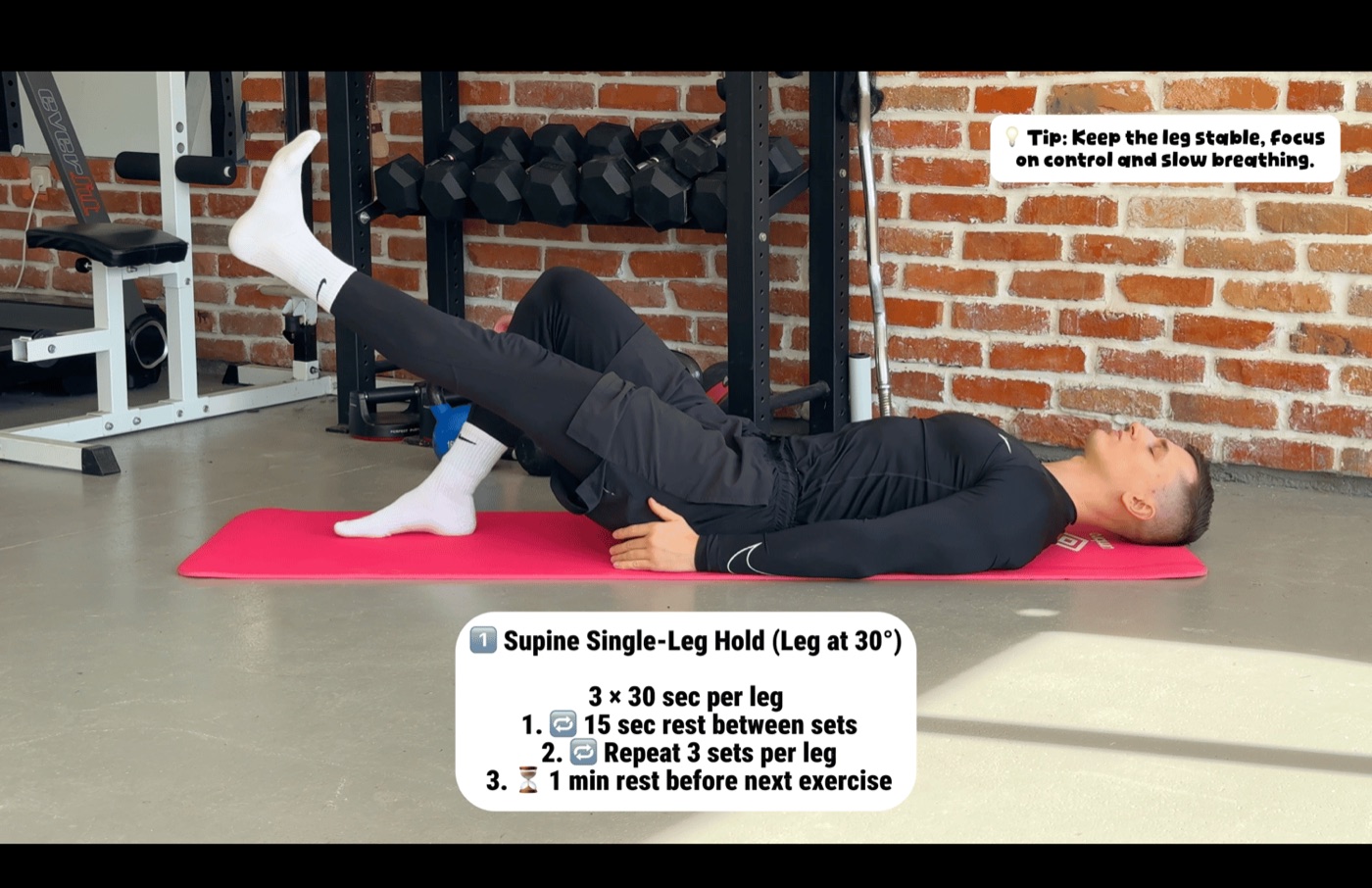
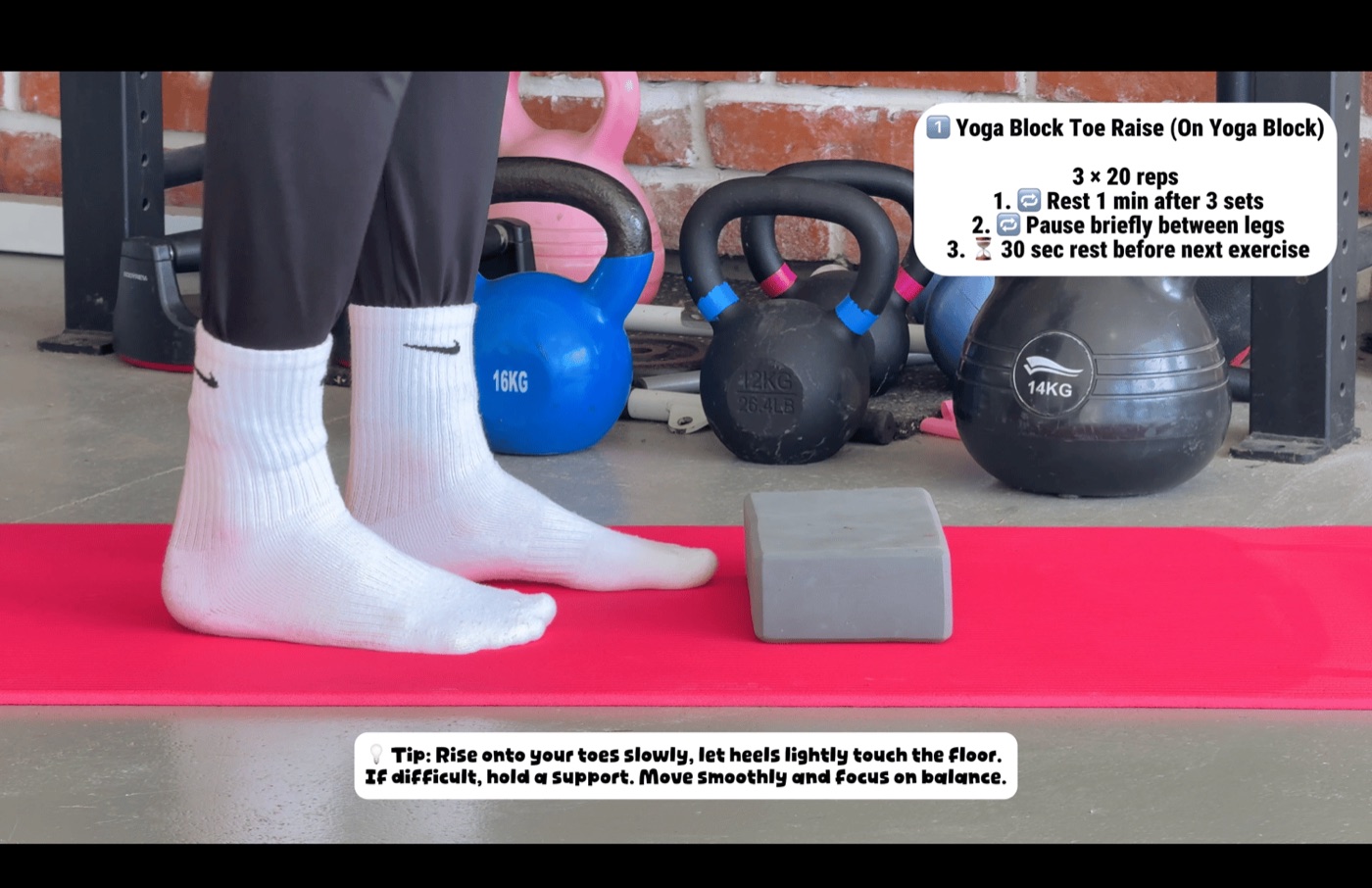
Every exercise arrives with its exact prescription and a cue for doing it right.
Who this program
was built for
Yes, if you…
- Get recurring lower back pain or stiffness every few months
- Sit for a living and feel it by the afternoon
- Want to lift, train and carry your kids without fear
- Are done with random core workouts that changed nothing
Not yet, if you…
- Have numbness, tingling or leg weakness — see a doctor first
- Are post-surgery without clearance to train
- Mainly have hip, knee or ankle problems — go here instead
- Want a one-session miracle fix
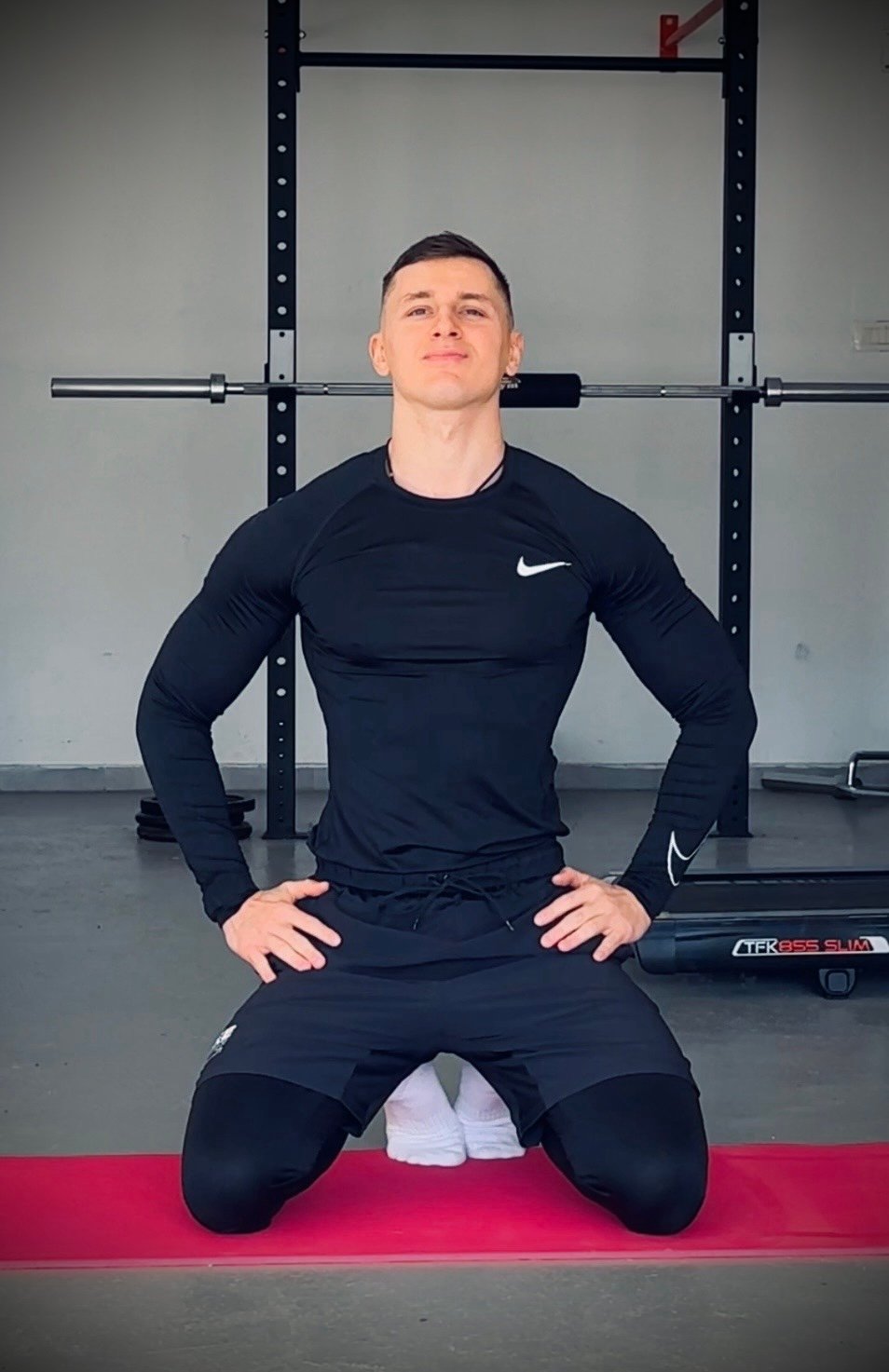
Roman Velychko
Two higher education degrees in physical and sports rehabilitation and 9+ years of coaching experience.
Same principles here, scaled to a desk job, a living room floor and 20 spare minutes.
Before you start
Do I need a gym?
I have a herniated disc. Can I do this?
How much time per week?
Can I keep training at the gym?
How long do I keep access?
How do I get the program after paying?
What currency am I charged in?
Which program should I start with?
Stop managing back pain.
Start fixing it.
Instant access. Lifetime access. No subscription.